
Despite the prolonged war, Ukrainians maintain a strong sense of purpose in life. Personal well-being remains at a medium level and varies depending on age, gender, and life circumstances.
The second wave of the pilot study on the well-being of Ukrainians shows that the feeling that the things done in life are worthwhile remains the highest and most stable indicator, suggesting its role as a psychological resource of resilience.
The results of the second wave of the pilot study on well-being, conducted in December 2024, show stabilisation of happiness levels among Ukrainians under conditions of full-scale war. The findings also record a gradual increase in the average level of life satisfaction and consistently high scores for the feeling that the things done in life are worthwhile, while the level of anxiety shows a tendency to increase.
The personal well-being indicator provides a comprehensive picture of people’s quality of life. Beyond material well-being, it reflects satisfaction with such aspects of life as physical and mental health, professional fulfilment, education, safety, personal relationships, and social connections.
According to the methodology of the UK Office for National Statistics (ONS), which was used in both the first and second waves, these factors are cumulatively reflected in four key indicators: life satisfaction, feeling that the things done in life are worthwhile, happiness, and anxiety.
Key findings of the second wave
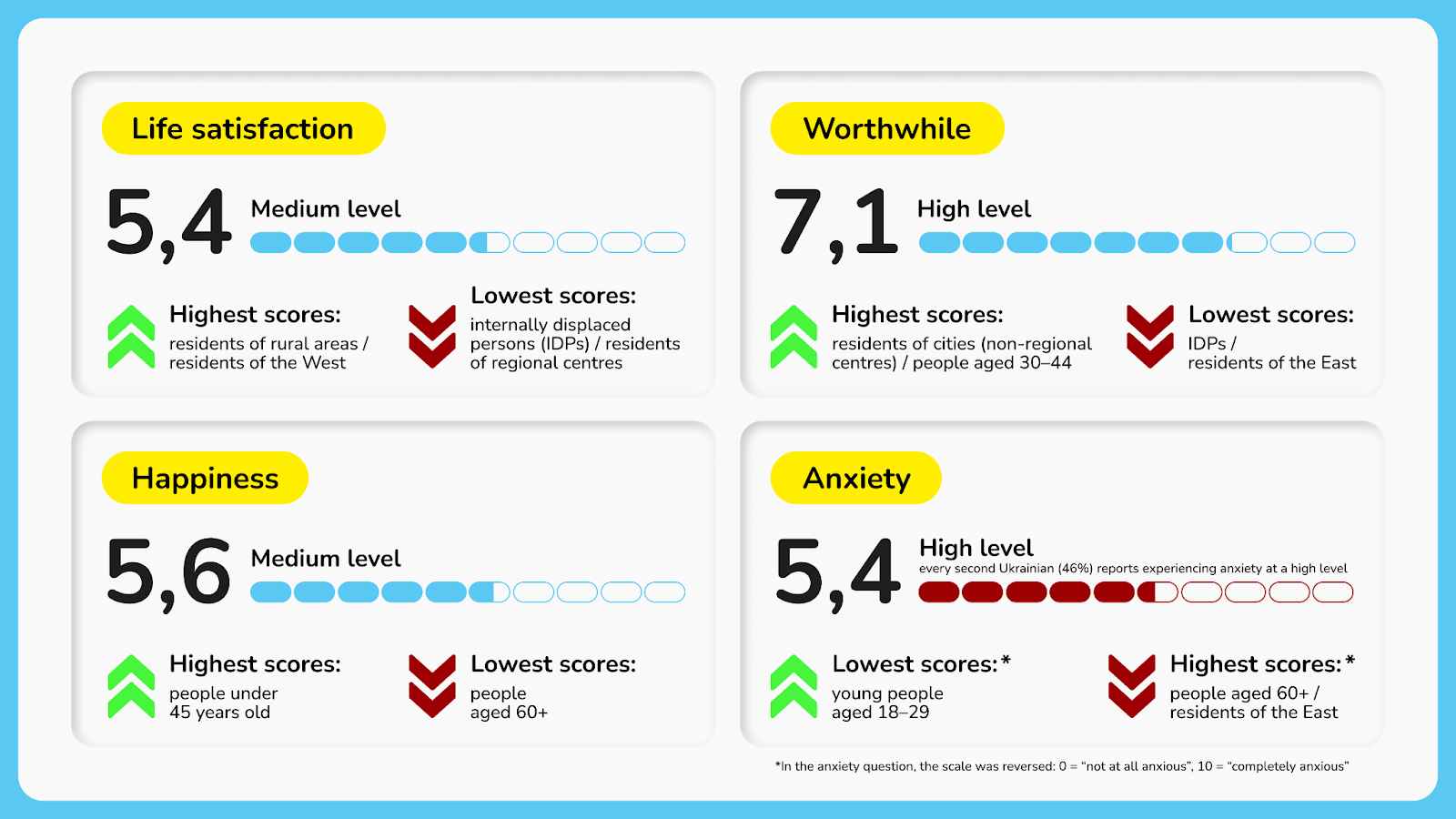
- Life satisfaction among Ukrainians remains at a medium level (5.4 out of 10), though it shows gradual improvement over the past six months. The highest scores are observed among residents of rural areas and those in the West, while the lowest are reported among internally displaced persons (IDPs) and residents of regional centres.
- The feeling that the things done in life are worthwhile – a key psychological resource that sustains internal resilience and adaptability during the war – remains the highest among all indicators (7.1 out of 10). The highest scores are recorded among residents of non-regional cities and people aged 30–44. Residents of the East and IDPs report lower scores on this indicator, though still above the medium level.
- Ukrainians overall rate their happiness at a medium level (5.6 out of 10), with no change over the past six months. The highest scores are reported among people under 45, and the lowest among people aged 60+.
- At the same time, anxiety continues to rise: nearly every second Ukrainian reports experiencing it at a high level. The highest scores are observed among people aged 60+ and residents of the East, while the lowest are among young people aged 18–29.
“Despite stress, anxiety, and loss, Ukrainians maintain a high sense of purpose in life. This indicator remains consistently high and even shows potential for growth in the context of a prolonged crisis. In contrast, the other indicators of personal well-being — life satisfaction, happiness, and anxiety — remain at medium levels, which corresponds to the extraordinary conditions in which the country lives. The sense of purpose is not only a psychological support but also a powerful resource for action and adaptation, sustaining emotional resilience and strengthening social cohesion.”
— Olena Litvinova, Partner at Ruban Litvinova Social Impact Advisory and co-author of the study.
“Since the 1990s, KIIS and other sociological institutions have been studying the well-being of the population. For example, KIIS has regularly asked questions about self-assessed financial situation and happiness levels among Ukrainians for 20–30 years. Among sociologists, there is a clear understanding of the need to go beyond the purely monetary dimension of well-being and to focus specifically on subjective well-being.
However, for various reasons – mostly objective ones – Ukraine currently lacks a single generally accepted methodology that is both reliable and relevant, while also compact and easy to integrate into regular surveys. The methodology of the UK Office for National Statistics offers an elegant, methodologically sound, and well-tested option that makes it possible to monitor the subjective well-being of Ukrainians.”
— Anton Grushetskyi, Executive Director at KIIS.
What do different groups of Ukrainians feel?
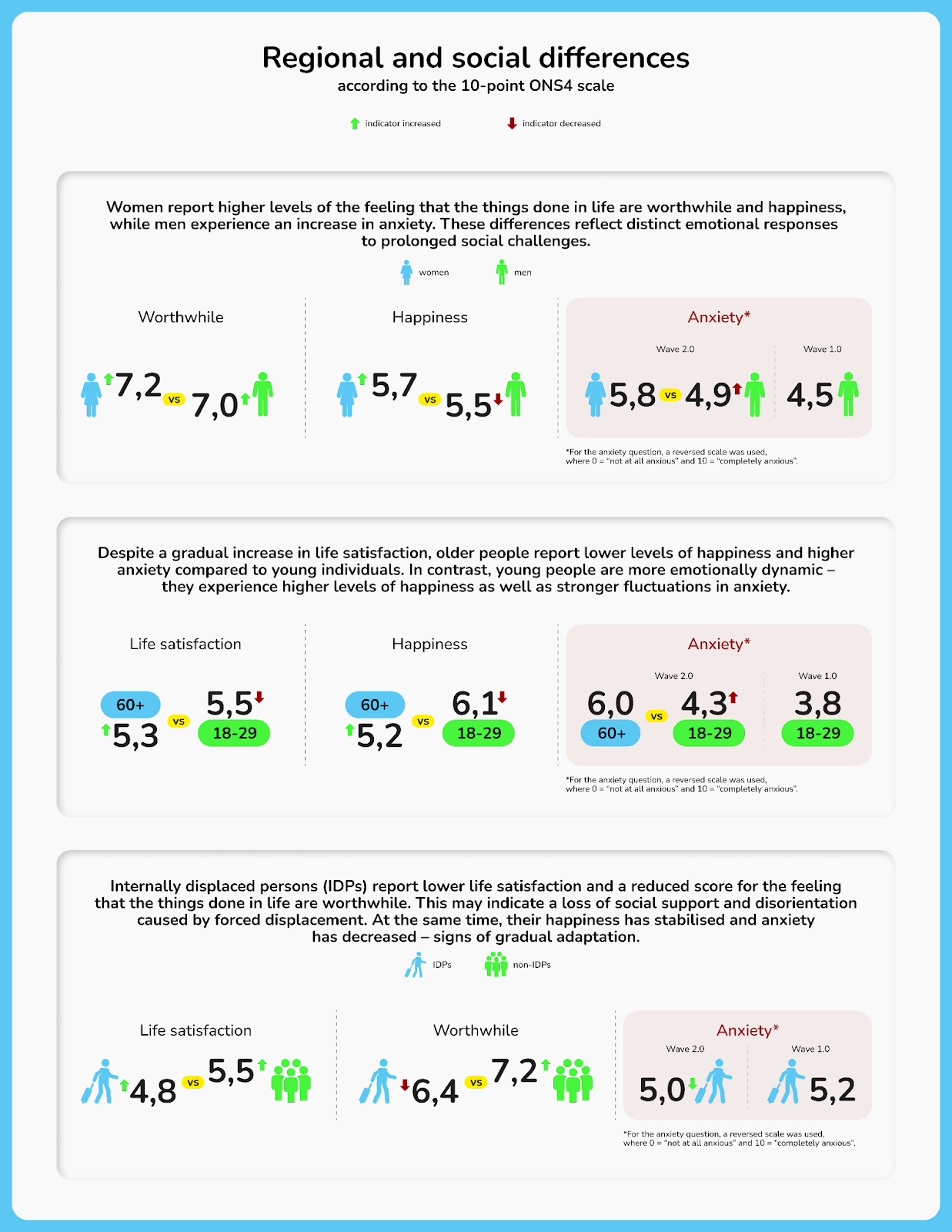
- Women report higher levels of the feeling that the things done in life are worthwhile and happiness, while men experience an increase in anxiety. These differences reflect distinct emotional responses to prolonged social challenges.
- Despite the gradual increase in life satisfaction, older people report lower levels of happiness and higher anxiety compared to young individuals. In contrast, young people are more emotionally dynamic – they experience higher levels of happiness as well as stronger fluctuations in anxiety.
- Internally displaced persons (IDPs) report lower life satisfaction and a reduced score for the feeling that the things done in life are worthwhile. This may indicate a loss of social support and a sense of disorientation caused by forced displacement. At the same time, their happiness has stabilised and anxiety has decreased – signs of gradual adaptation.
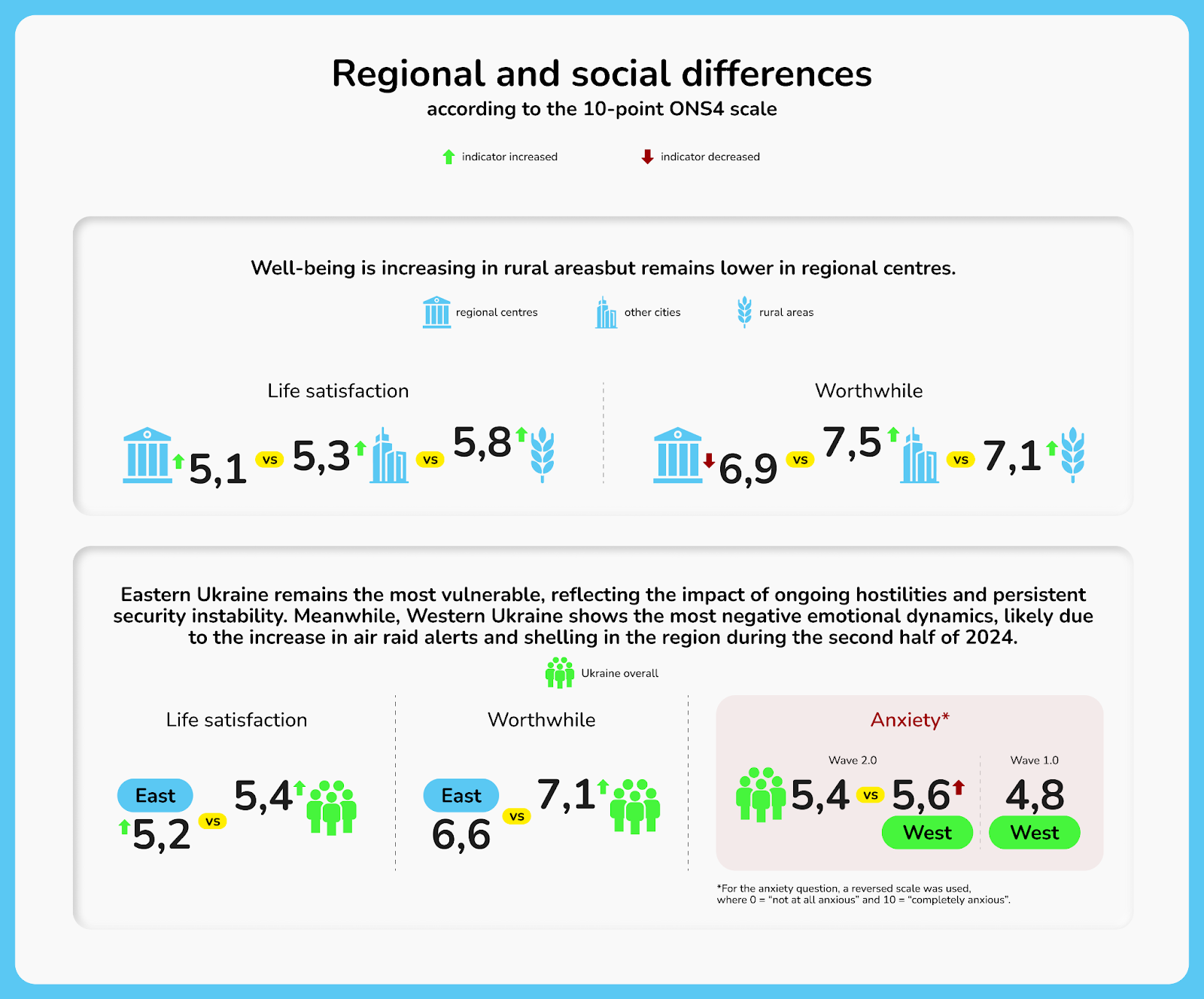
- Well-being is increasing in rural areas but remains lower in regional centres. This may reflect stronger social cohesion in smaller communities.
- Eastern Ukraine remains the most vulnerable region, reflecting the impact of ongoing hostilities and persistent security instability. Meanwhile, Western Ukraine shows the most negative emotional dynamics, likely due to the increase in air raid alerts and shelling in the region during the second half of 2024.
The study was conducted by the Agency for Impact Strategy Development, Ruban Litvinova Social Impact Advisory, and the Kyiv International Institute of Sociology (KIIS), facilitated by Social Value Ukraine, which represents the international network Social Value International in Ukraine. The survey was carried out in December 2024 using the CATI method (Computer-Assisted Telephone Interviewing) and covered 1,000 respondents from government-controlled areas of Ukraine.
About the initiators of the study
Ruban Litvinova Social Impact Advisory – the first Ukrainian agency to develop evidence-based social impact strategies. The agency uses the global Social Return on Investment (SROI) methodology to measure social value, evaluate the effectiveness of initiatives, and communicate results transparently.
🌐 https://rubanlitvinova.com
Kyiv International Institute of Sociology (KIIS) – one of Ukraine’s leading research companies, collaborating with international organisations, government bodies, and media.
🌐 https://kiis.com.ua
Social Value Ukraine – the first Ukrainian network dedicated to advancing the practice of social value measurement and social impact management.
🌐 https://www.svu.org.ua